 Wildlife
of Bhutan
Red-throated Pipit
Larks, Pipits & Wagtails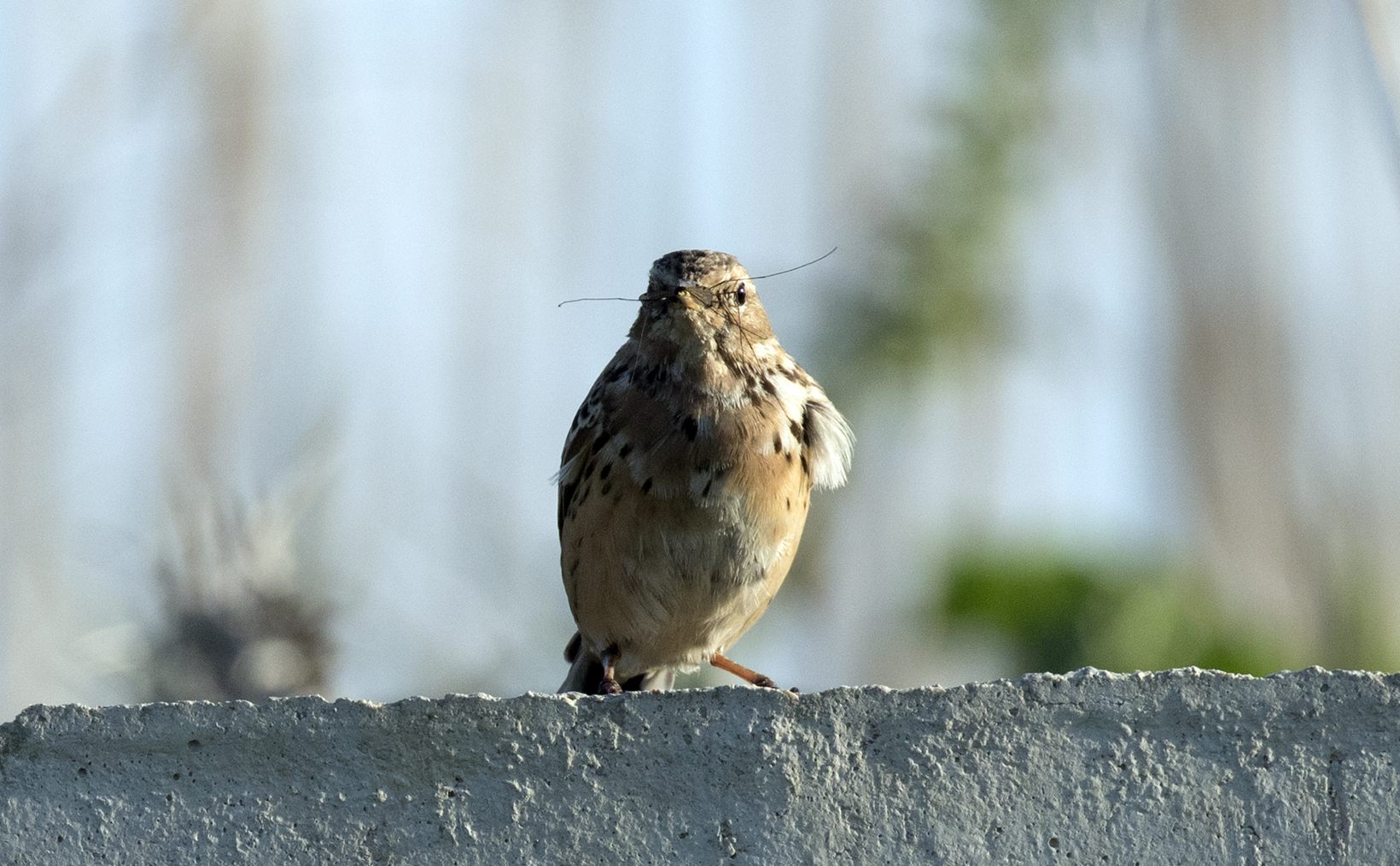
Photo: Zeynel Cebeci · CC BY-SA 4.0 (May be cropped or resized)
Anthus cervinus
Basic stats
Diet
Insects, also seeds
Habitat
Open country including mountains, marshland and tundra; nest on the ground, often beside a grass tussock
Range
Breeds in the far north of Europe and the Palearctic, with a foothold in northern Alaska; winters in Africa and South-East Asia
Clutch size
4–6 eggs
The red-throated pipit is a small passerine that breeds in the far north of Europe and the Palearctic, with a foothold in northern Alaska, and is a long-distance migrant wintering in Africa and South-East Asia. In the breeding season the adult is easily identified by its brick-red face and throat; in other plumages it is heavily streaked brown above, with black markings on a white background below (Wikipedia, general species account).
It breeds in open country including mountains, marshland and tundra, with the nest on the ground, often beside a grass tussock. It is insectivorous but also eats seeds, and gives a characteristic 'psii' call in flight. Four to six eggs are laid and incubated by the female for nearly two weeks, with the young leaving the nest about 12 days later. The account opened does not name Bhutan.
Quick answers
- What does the Red-throated Pipit eat?
- Insects, also seeds
- What habitat does the Red-throated Pipit live in?
- Open country including mountains, marshland and tundra; nest on the ground, often beside a grass tussock
- Where is the Red-throated Pipit found?
- Breeds in the far north of Europe and the Palearctic, with a foothold in northern Alaska; winters in Africa and South-East Asia
- How many eggs does the Red-throated Pipit lay?
- 4–6 eggs