 Wildlife
of Bhutan
Olive-backed Pipit
Larks, Pipits & Wagtails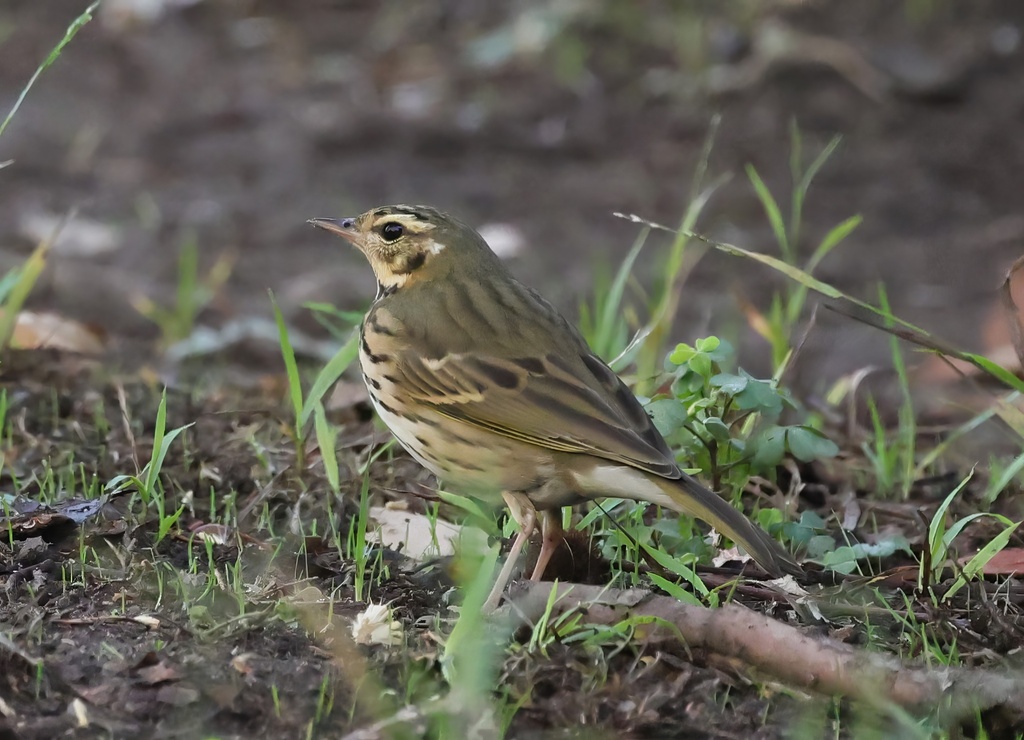
Photo: (c) nmoorhatch, some rights reserved (CC BY) · CC BY 4.0 (May be cropped or resized)
Anthus hodgsoni
Basic stats
Habitat
Open woodland and scrub; nest a cup of moss and grass on the ground under a tuft or boulder; breeds up to 4,500m in eastern Nepal
Range
Breeds across southern, north-central and eastern Asia and north-eastern European Russia; winters in southern Asia and Indonesia
Clutch size
3–5 dark brown spotted eggs, usually 4
Size
About 15cm
The olive-backed pipit is a small pipit about 15cm long, greenish brown streaked darker brown above and whitish to buff below, streaked dark brown on the breast and flanks. It is sometimes called the Indian or Hodgson's pipit, or tree pipit owing to its resemblance to that species (Wikipedia, general species account).
It breeds across southern, north-central and eastern Asia and north-eastern European Russia, and is a long-distance migrant, wintering in southern Asia and Indonesia. It breeds up to 4,500m in eastern Nepal. The song is lark-like and uttered on the wing, faster and higher pitched than the tree pipit's. The nest is a cup of moss and grass on the ground, and three to five eggs are laid.
Quick answers
- What habitat does the Olive-backed Pipit live in?
- Open woodland and scrub; nest a cup of moss and grass on the ground under a tuft or boulder; breeds up to 4,500m in eastern Nepal
- Where is the Olive-backed Pipit found?
- Breeds across southern, north-central and eastern Asia and north-eastern European Russia; winters in southern Asia and Indonesia
- How many eggs does the Olive-backed Pipit lay?
- 3–5 dark brown spotted eggs, usually 4
- How big is the Olive-backed Pipit?
- About 15cm