 Wildlife
of Bhutan
Long-tailed Shrike
Crows, Drongos, Orioles & Shrikes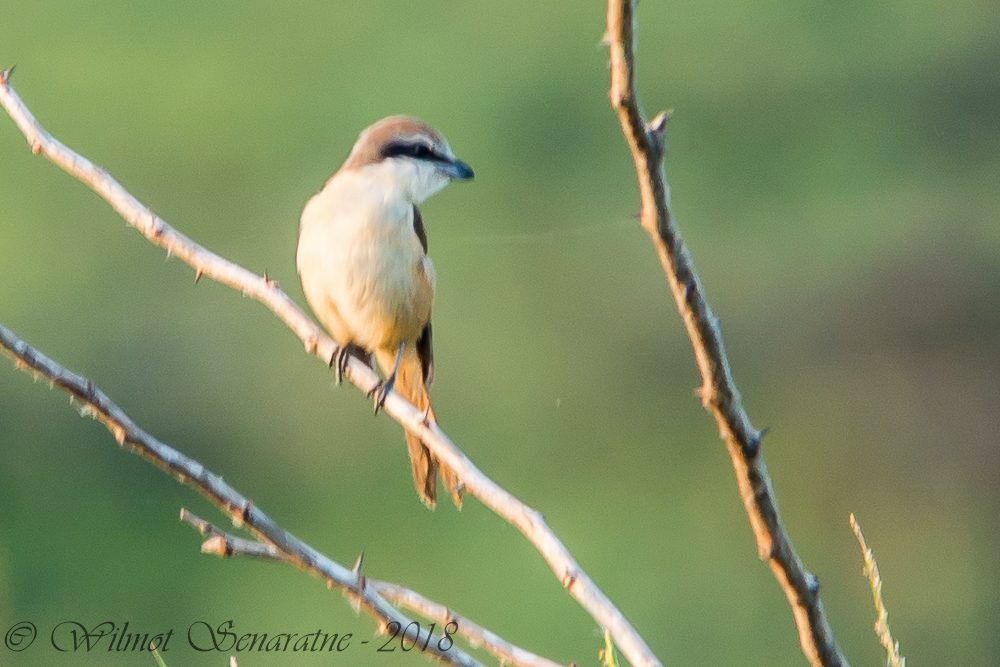
Photo: wilmotsenaratne · CC0 1.0
Lanius schach
Basic stats
Habitat
Maintains feeding territories; usually single
Range
Widely distributed across Asia; the Himalayan form migrates south to Bengal
Clutch size
About 3–6 eggs
Incubation period
13–16 days
The long-tailed shrike, or rufous-backed shrike, is widely distributed across Asia, with plumage varying between races. All have a long, narrow black tail, a black mask and forehead, a rufous rump and flanks and a small white shoulder patch. The Himalayan form, sometimes called the black-headed shrike, migrates south to Bengal. The sexes look alike (Wikipedia, general species account).
It maintains feeding territories and is usually alone, with pairs well spaced out. The calls are harsh, grating and scolding, and it mimics many other species, including lapwings, cuckoos and squirrels. The usual clutch is about three to six eggs, incubated by both sexes and hatching in about 13 to 16 days, and a second brood may be raised in the same nest.
Quick answers
- What habitat does the Long-tailed Shrike live in?
- Maintains feeding territories; usually single
- Where is the Long-tailed Shrike found?
- Widely distributed across Asia; the Himalayan form migrates south to Bengal
- How many eggs does the Long-tailed Shrike lay?
- About 3–6 eggs
- How long are the eggs of the Long-tailed Shrike incubated?
- 13–16 days