 Wildlife
of Bhutan
Black-winged Cuckooshrike
Crows, Drongos, Orioles & Shrikes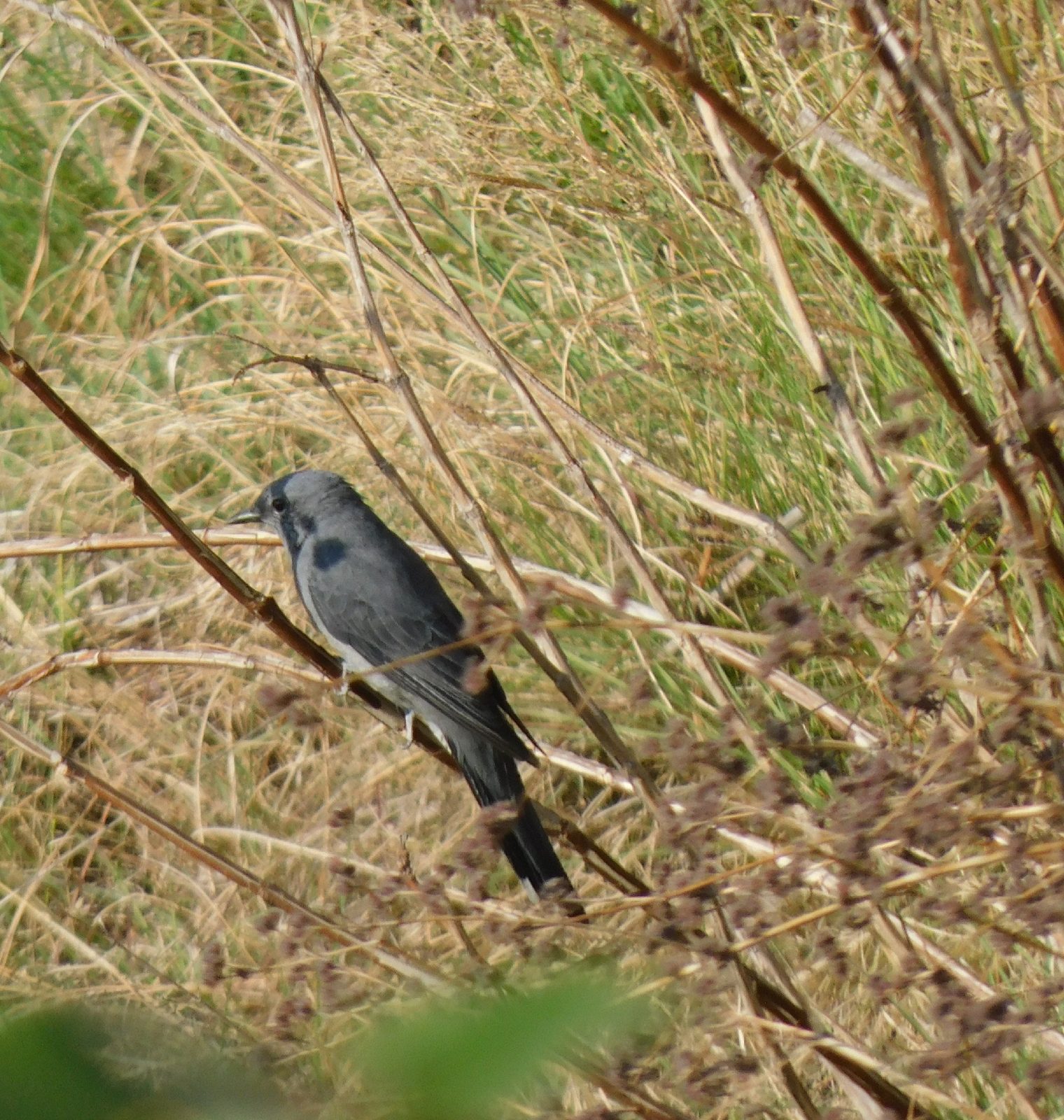
Photo: (c) Jagdish Singh Negi, some rights reserved (CC BY) · CC-BY (May be cropped or resized)
Lalage melaschistos
Basic stats
Diet
Mainly caterpillars, beetles and other invertebrates
Habitat
Breeds in deciduous and broad-leaved evergreen forest at 300–2,450m; winters in open forest and groves
Range
South to Southeast Asia
The black-winged cuckooshrike, also called the lesser grey cuckooshrike, is a medium-sized, dark cuckooshrike, unrelated to either shrikes or cuckoos. The male is dark grey above with contrasting black wings and tail and wide white tips on the underside of the tail, with unbarred grey underparts. The female is paler with faint barring below (Wikipedia, general species account).
It breeds in summer in mountains from 300 to 2,450m, in deciduous and broad-leaved evergreen forest, and migrates altitudinally or south in winter, when it frequents open forest and groves, singly or in pairs. It joins mixed feeding parties and eats mainly caterpillars, beetles and other invertebrates. The call is a loud 'twit twit', descending in scale.
Quick answers
- What does the Black-winged Cuckooshrike eat?
- Mainly caterpillars, beetles and other invertebrates
- What habitat does the Black-winged Cuckooshrike live in?
- Breeds in deciduous and broad-leaved evergreen forest at 300–2,450m; winters in open forest and groves
- Where is the Black-winged Cuckooshrike found?
- South to Southeast Asia