 Wildlife
of Bhutan
Wallcreeper
Tits, Nuthatches & Treecreepers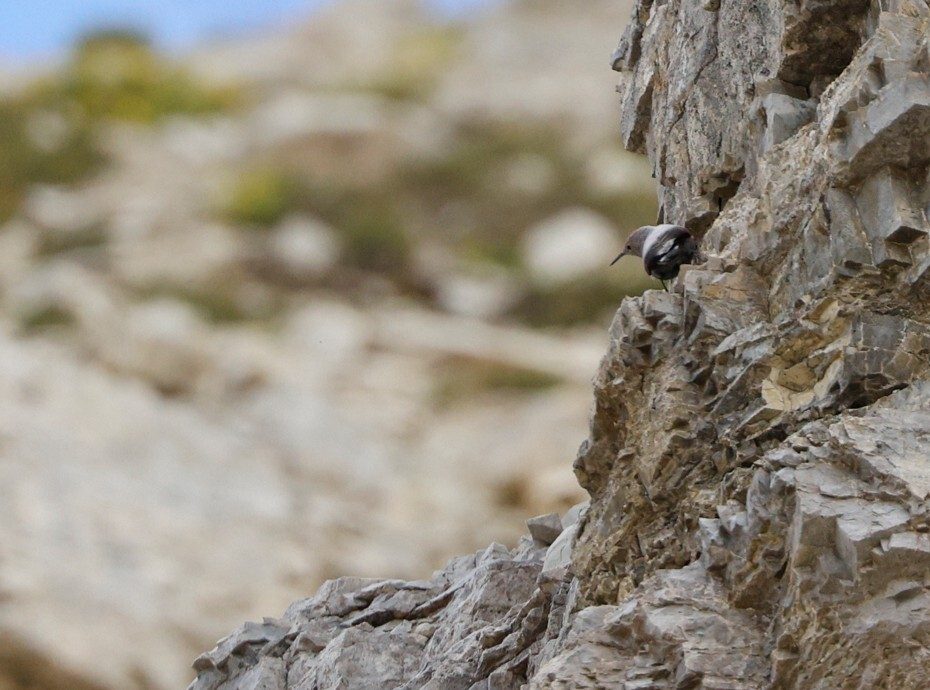
Photo: (c) Claude Kolwelter, some rights reserved (CC BY) · CC-BY (May be cropped or resized)
Tichodroma muraria
Basic stats
Habitat
High mountains; breeds at 3,600–5,100m in the Himalaya
Range
High mountains of the Palearctic from southern Europe to central China; resident across much of the Himalayas including Bhutan
Clutch size
4–5 eggs, sometimes 3
Incubation period
19–20 days
Size
Small
The wallcreeper is a small passerine of the high mountains of the Palearctic, from southern Europe to central China, and the only living member of its genus and family. It breeds at 3,600 to 5,100m in the Himalaya and is resident across much of the range, including India, Nepal, Bhutan and parts of Tibet, and a winter visitor in Bangladesh (Wikipedia, general species account).
Its plumage is primarily blue-grey, but its most striking feature is the crimson wings with white spots; in summer males have a black throat, while in autumn and winter both sexes have a white throat. The female usually lays four or five white eggs speckled black or reddish brown and incubates them for 19 to 20 days, and both parents feed the nestlings for 28 to 30 days until they fledge.
Quick answers
- What habitat does the Wallcreeper live in?
- High mountains; breeds at 3,600–5,100m in the Himalaya
- Where is the Wallcreeper found?
- High mountains of the Palearctic from southern Europe to central China; resident across much of the Himalayas including Bhutan
- How many eggs does the Wallcreeper lay?
- 4–5 eggs, sometimes 3
- How long are the eggs of the Wallcreeper incubated?
- 19–20 days
- How big is the Wallcreeper?
- Small