
 Wildlife
of Bhutan
Ultramarine Flycatcher
Thrushes, Chats & Flycatchers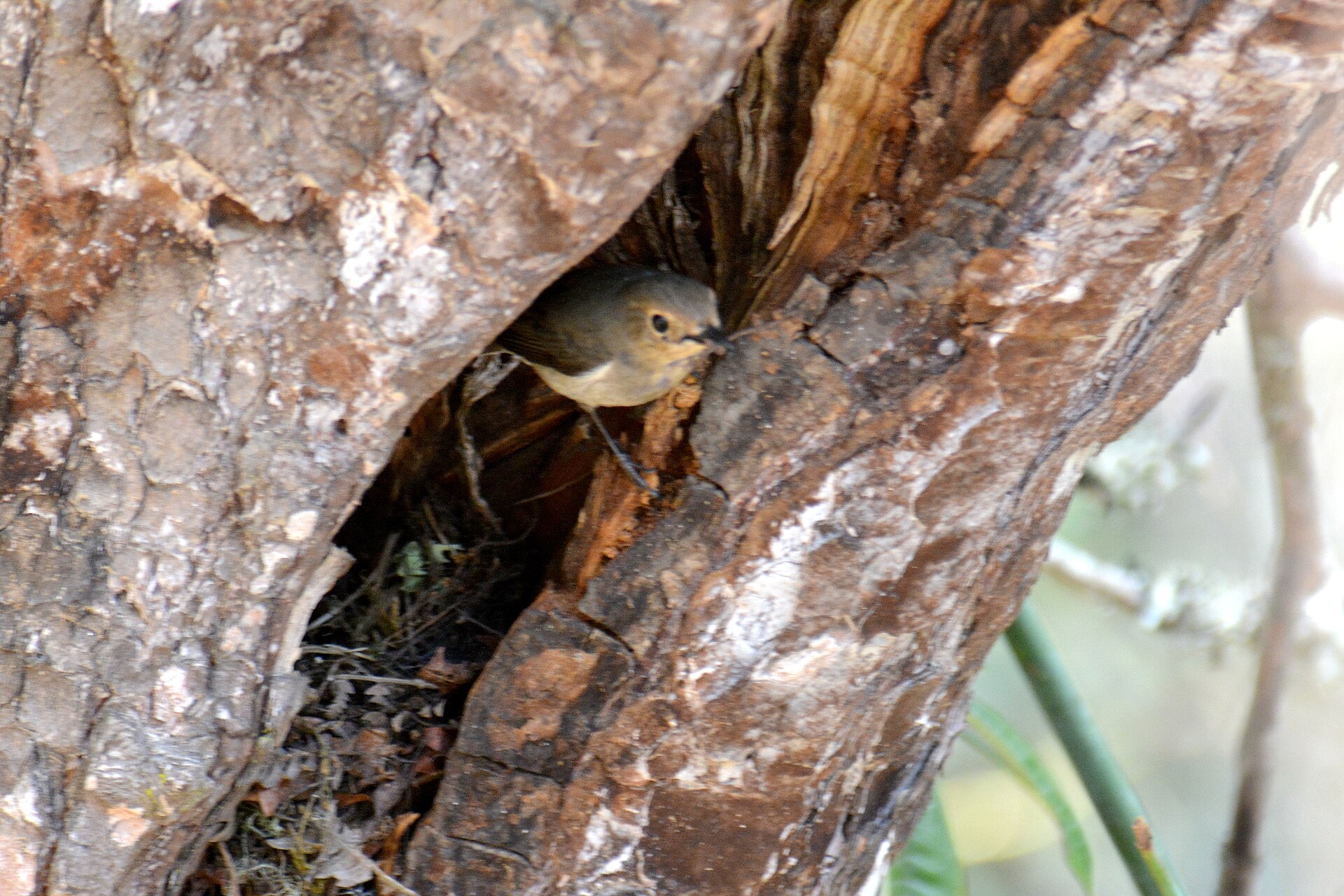
Photo: Dr. Raju Kasambe · CC BY-SA 4.0 (May be cropped or resized)
Ficedula superciliaris
Basic stats
Diet
Mainly insects
Habitat
Low trees and bushes, feeding in the foliage canopy; breeds at 2,000–2,700m, occasionally 1,800–3,200m; nest in holes or clefts in trees, or a depression on a steep bank
Range
Breeds from eastern Afghanistan to the Hengduan Mountains; winters in India and north-western Indochina; eastern race through Bhutan to Arunachal Pradesh
Clutch size
3–5 eggs, usually 4
Size
About 10cm
The ultramarine flycatcher, or white-browed blue flycatcher, is a small arboreal flycatcher, somewhat smaller than a sparrow (about 10cm) with a stocky build. The male is deep blue above with a prominent white patch from the throat through the breast to the belly. The eastern race, F. s. aestigma, continues in the eastern Himalayas through Bhutan to Arunachal Pradesh (Wikipedia, general species account).
It breeds between 2,000 and 2,700m, occasionally from 1,800 to 3,200m, from mid-April to early July, and winters in India and north-western Indochina. It is usually single, sometimes in mixed hunting parties in winter, keeping to low trees and bushes and constantly jerking its tail up. The nest is a soft structure of fine moss lined with hair and rootlets, in holes or clefts in trees up to seven metres up, or a depression on a steep bank, with three to five eggs.
Quick answers
- What does the Ultramarine Flycatcher eat?
- Mainly insects
- What habitat does the Ultramarine Flycatcher live in?
- Low trees and bushes, feeding in the foliage canopy; breeds at 2,000–2,700m, occasionally 1,800–3,200m; nest in holes or clefts in trees, or a depression on a steep bank
- Where is the Ultramarine Flycatcher found?
- Breeds from eastern Afghanistan to the Hengduan Mountains; winters in India and north-western Indochina; eastern race through Bhutan to Arunachal Pradesh
- How many eggs does the Ultramarine Flycatcher lay?
- 3–5 eggs, usually 4
- How big is the Ultramarine Flycatcher?
- About 10cm