 Wildlife
of Bhutan
Little Owl
Owls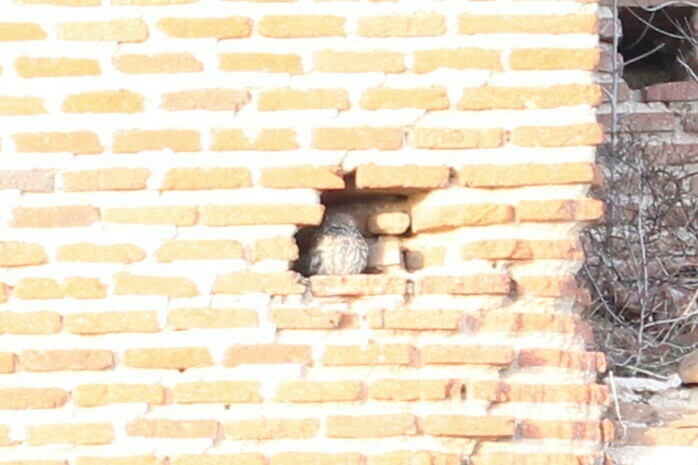
Photo: (c) Javier Sánchez Álvarez, some rights reserved (CC BY) · CC BY 4.0 (May be cropped or resized)
Athene noctua
Basic stats
Diet
Insects, earthworms, other invertebrates and small vertebrates
Habitat
Farmland, woodland fringes, steppes and semi-deserts; cavity nester
Range
Temperate and warmer Europe, the Palearctic east to Korea and North Africa
Clutch size
About 4 eggs
Size
About 22cm
The little owl is a small, cryptically coloured, mainly nocturnal owl about 22cm long, with a flat-topped head, a plump, compact body and a short tail. The plumage is greyish-brown, spotted, streaked and barred with white, and the underparts are pale and streaked. It inhabits much of temperate and warmer Europe, the Palearctic east to Korea, and North Africa (Wikipedia, general species account).
It lives in farmland, woodland fringes, steppes and semi-deserts and nests in cavities, with a clutch of about four eggs laid in spring. The female incubates and the male brings food. The chicks leave the nest at about seven weeks. The call is a querulous 'kiew, kiew'. The sources read describe a western Palearctic bird, so its occurrence in Bhutan is flagged for checking.
Quick answers
- What does the Little Owl eat?
- Insects, earthworms, other invertebrates and small vertebrates
- What habitat does the Little Owl live in?
- Farmland, woodland fringes, steppes and semi-deserts; cavity nester
- Where is the Little Owl found?
- Temperate and warmer Europe, the Palearctic east to Korea and North Africa
- How many eggs does the Little Owl lay?
- About 4 eggs
- How big is the Little Owl?
- About 22cm