 Wildlife
of Bhutan
Himalayan Marmot
Squirrels & Flying Squirrels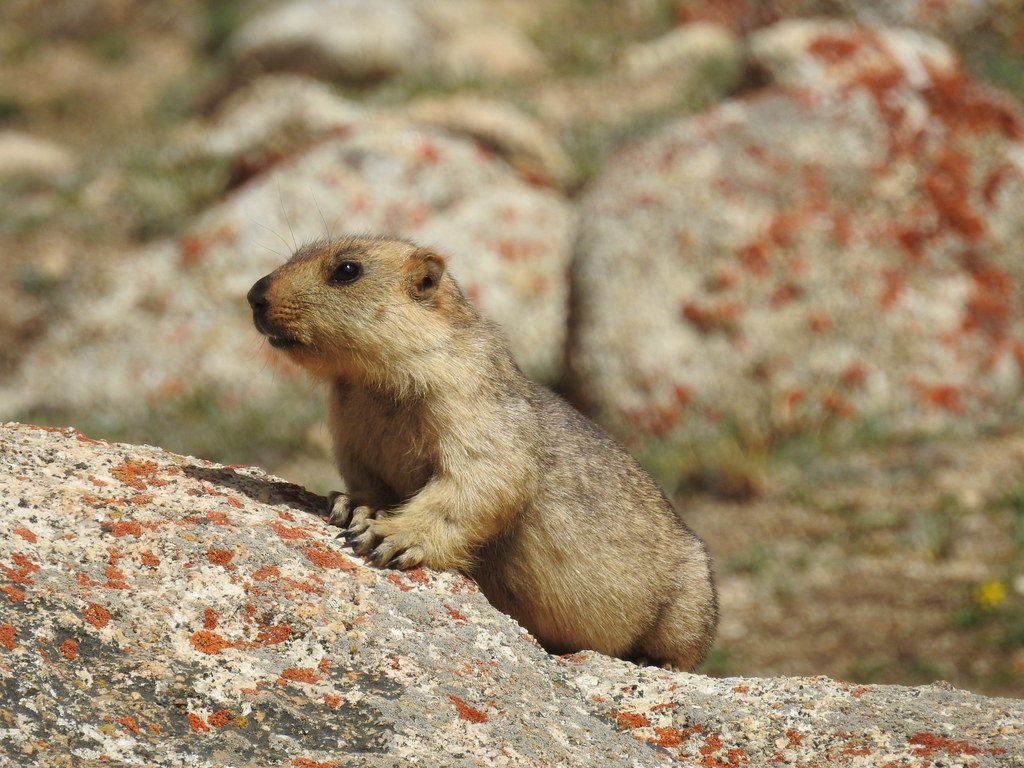
Photo: Ashwin Viswanathan · CC-BY (May be cropped or resized)
Marmota himalayana
Basic stats
Diet
Pasture plants, especially the soft parts of grasses and sedges, and flowering plants
Habitat
Alpine grassland at 3,000–5,500m; deep colonial burrows
Range
Himalayas and Tibetan Plateau: Pakistan, India, Nepal, Bhutan and China
Litter size
2–11 young
Gestation period
About one month
Size
Total length 45–67cm; tail 12–15cm
Weight
4–9.2kg
The Himalayan marmot is one of the largest marmots, about the size of a large housecat. Average weight is 4 to 9.2kg, lowest after hibernation in spring and highest before it in autumn, when it is reportedly over 7kg in both sexes. Total length is about 45 to 67cm, with a tail of 12 to 15cm, and the bridge of the nose and tail end are dark brown (Wikipedia, general species account).
It lives in alpine grasslands at 3,000 to 5,500m in Pakistan, India, Nepal, Bhutan and China. Colonies share deep burrows, 2 to 10m deep, during hibernation, and the animals eat plants growing on pastures. After about a month of gestation females give birth to two to eleven young. The Mammal Diversity Database does not list Bhutan, though Wikipedia does.
Quick answers
- What does the Himalayan Marmot eat?
- Pasture plants, especially the soft parts of grasses and sedges, and flowering plants
- What habitat does the Himalayan Marmot live in?
- Alpine grassland at 3,000–5,500m; deep colonial burrows
- Where is the Himalayan Marmot found?
- Himalayas and Tibetan Plateau: Pakistan, India, Nepal, Bhutan and China
- What is the litter size of the Himalayan Marmot?
- 2–11 young
- How long is the gestation period of the Himalayan Marmot?
- About one month
- How big is the Himalayan Marmot?
- Total length 45–67cm; tail 12–15cm
- How much does the Himalayan Marmot weigh?
- 4–9.2kg