 Wildlife
of Bhutan
Gaur
Wild Cattle & Serow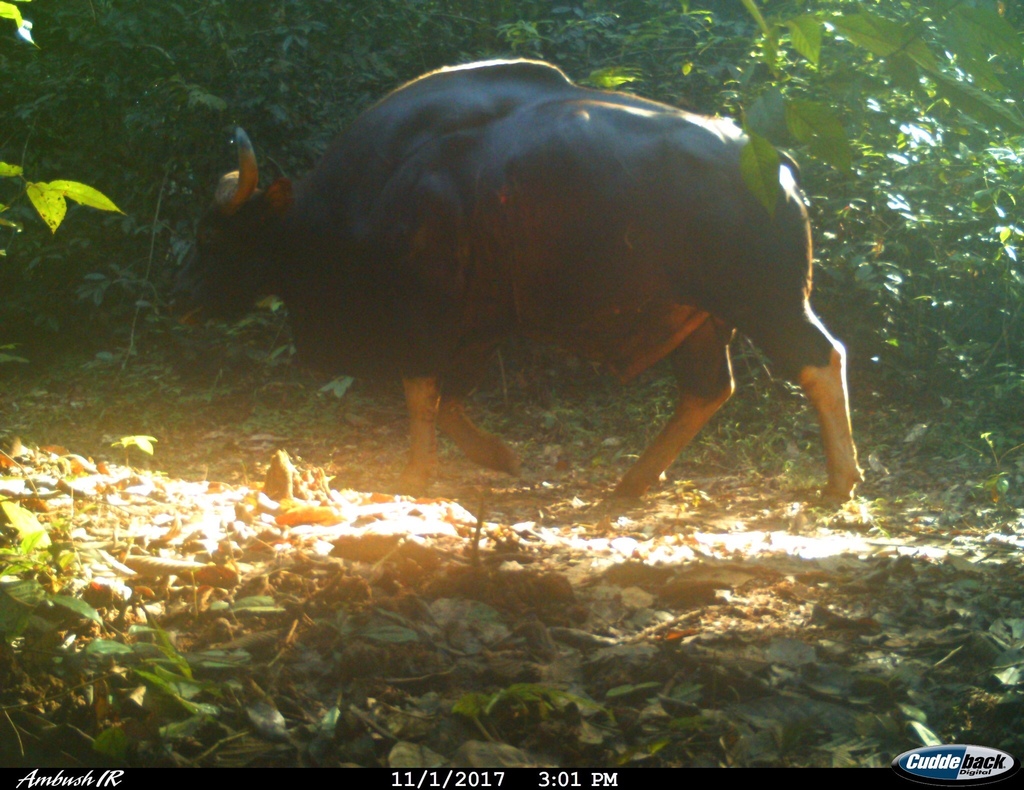
Photo: otomops · CC-BY (May be cropped or resized)
Bos gaurus
Basic stats
Diet
Grasses, bamboo, shrubs and trees
Habitat
Large, relatively undisturbed forest and hilly terrain below 1,500–1,800m with water
Range
In Bhutan the southern foothill zone, notably Royal Manas National Park, Phibsoo and Khaling Wildlife Sanctuaries
Size
Males just under 200cm at the hump; horns 60–115cm
The gaur is the largest of the wild cattle. A distinct ridge runs from the shoulders to the middle of the back, and the ears are very large. Adult males are dark brown, approaching black in very old animals, with an ashy grey or dirty white upper head, a pale muzzle and white or tan lower legs. Cows and young bulls are paler, sometimes with a rufous tinge (Wikipedia, general species account).
In Bhutan the gaur apparently persists all over the southern foothill zone, notably in Royal Manas National Park, Phibsoo Wildlife Sanctuary and Khaling Wildlife Sanctuary. The populations in India, Bhutan and Bangladesh together are estimated at 23,000 to 34,000 animals. Where undisturbed, herds are largely diurnal, and adult males may be solitary.
Quick answers
- What does the Gaur eat?
- Grasses, bamboo, shrubs and trees
- What habitat does the Gaur live in?
- Large, relatively undisturbed forest and hilly terrain below 1,500–1,800m with water
- Where is the Gaur found?
- In Bhutan the southern foothill zone, notably Royal Manas National Park, Phibsoo and Khaling Wildlife Sanctuaries
- How big is the Gaur?
- Males just under 200cm at the hump; horns 60–115cm