 Wildlife
of Bhutan
Masked Palm Civet
Civets, Linsangs & Mongooses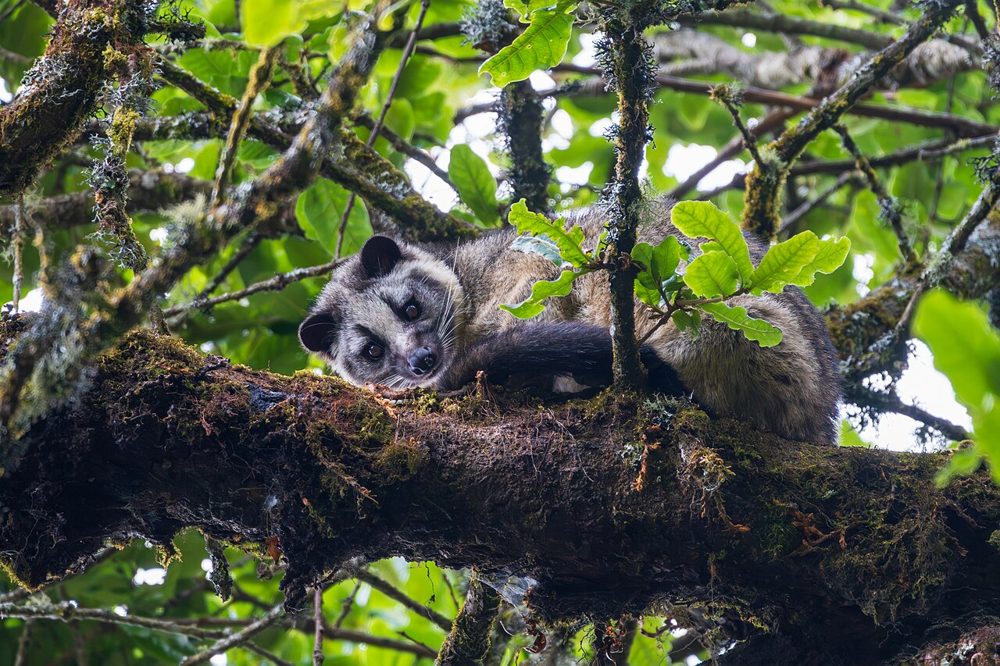
Photo: Sunuwargr · CC BY-SA 4.0 (May be cropped or resized)
Paguma larvata
Basic stats
Diet
Rats, birds, fruit such as figs, mangoes and bananas, leaves, molluscs and arthropods
Habitat
Partly arboreal
Range
Northern Indian subcontinent, especially the Himalayas, east through Bhutan to China and Southeast Asia
Litter size
Up to 4 young
Size
Body 50–60cm; tail 40–50cm
Weight
3–5kg
The masked palm civet, also called the gem-faced or Himalayan palm civet, has grey to ochre fur that is black on the head, shoulders and neck and blackish brown on the tail and feet. A white blaze on the forehead and white marks above and below the eyes form a half-collar. It has no spots or stripes (Wikipedia, general species account).
It is distributed from the northern Indian subcontinent, especially the Himalayas, east across Bhutan to China and Southeast Asia. It is a nocturnal, solitary predator, occasionally active by day, and partly arboreal. It eats rats, birds, fruit and leaves, with the diet varying by season and site. There are two breeding seasons a year and a female bears up to four young.
Quick answers
- What does the Masked Palm Civet eat?
- Rats, birds, fruit such as figs, mangoes and bananas, leaves, molluscs and arthropods
- What habitat does the Masked Palm Civet live in?
- Partly arboreal
- Where is the Masked Palm Civet found?
- Northern Indian subcontinent, especially the Himalayas, east through Bhutan to China and Southeast Asia
- What is the litter size of the Masked Palm Civet?
- Up to 4 young
- How big is the Masked Palm Civet?
- Body 50–60cm; tail 40–50cm
- How much does the Masked Palm Civet weigh?
- 3–5kg