 Wildlife
of Bhutan
Golden Bush Robin
Thrushes, Chats & Flycatchers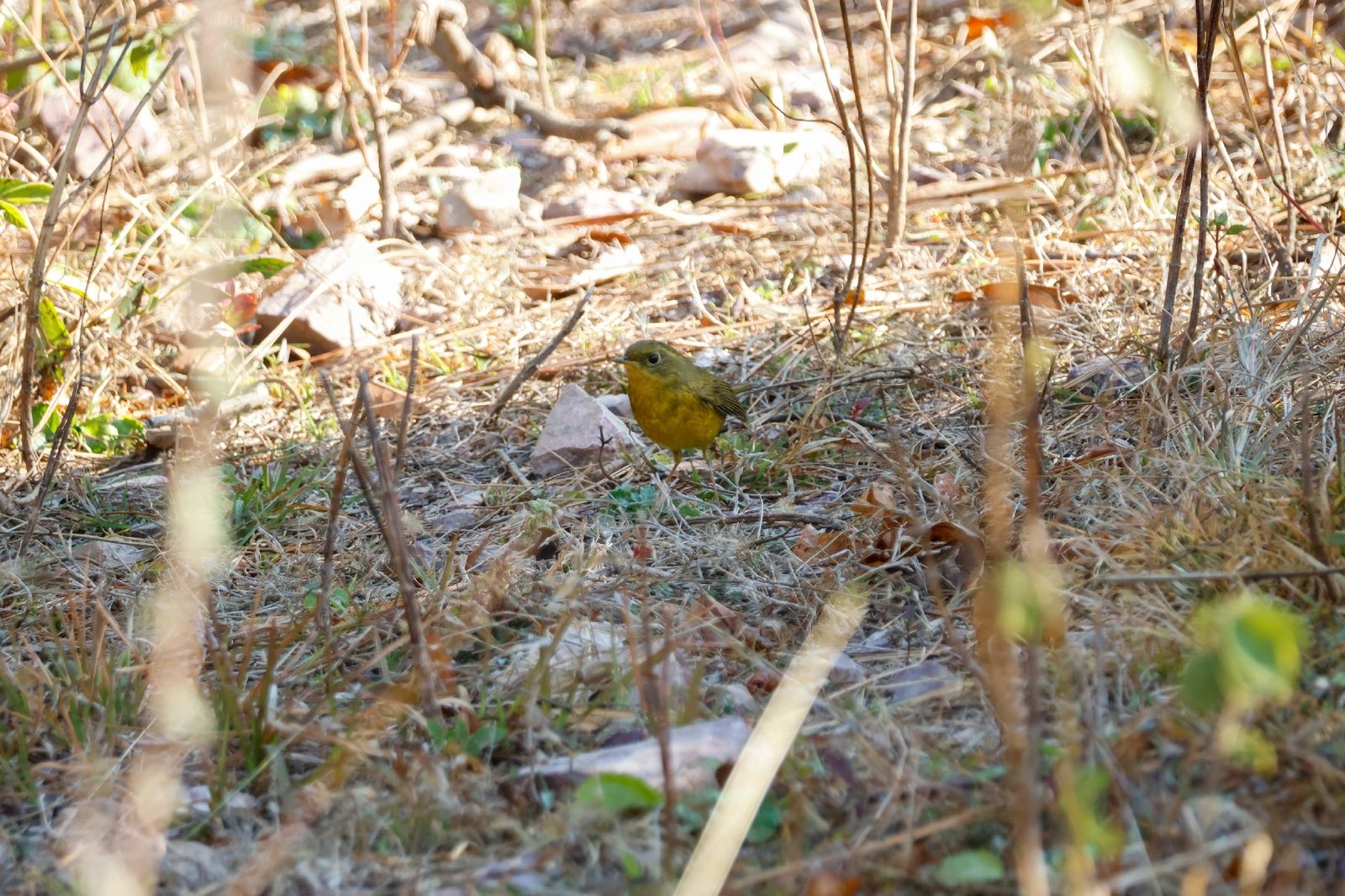
Photo: (c) Mathieu Soetens, some rights reserved (CC BY) · CC-BY (May be cropped or resized)
Tarsiger chrysaeus
Basic stats
Diet
Insects, mostly close to the ground
Habitat
Open areas with temperate forests, bamboo forests, grassland and shrubland around the Himalayan mountain range; nest of compacted moss and grass lined with hair, wool and feathers
Range
Himalayan range and surrounding highlands: Bhutan, China, India, Myanmar, Nepal, Pakistan, Tibet and Thailand
Clutch size
3–4 eggs
Incubation period
14–15 days
Size
14–15cm
The golden bush robin was first discovered in 1845 by Brian Houghton Hodgson, a British naturalist. It is typically 14 to 15cm long and known for its golden colour: the male has a brownish-olive back and a bright yellow-orange underside, and the female has the same pattern but duller. Its habitat is dispersed around the Himalayan range and surrounding highlands of Bhutan, China, India, Myanmar, Nepal, Pakistan, Tibet and Thailand (Wikipedia, general species account).
It lives mainly in open areas with temperate forest, bamboo forest, grassland and shrubland, and is insectivorous, hunting mainly close to the ground. The breeding season in Pakistan is May to June, with nests of compacted moss and grass lined with hair, wool and feathers. The female lays three or four eggs, with an incubation period of 14 or 15 days.
Quick answers
- What does the Golden Bush Robin eat?
- Insects, mostly close to the ground
- What habitat does the Golden Bush Robin live in?
- Open areas with temperate forests, bamboo forests, grassland and shrubland around the Himalayan mountain range; nest of compacted moss and grass lined with hair, wool and feathers
- Where is the Golden Bush Robin found?
- Himalayan range and surrounding highlands: Bhutan, China, India, Myanmar, Nepal, Pakistan, Tibet and Thailand
- How many eggs does the Golden Bush Robin lay?
- 3–4 eggs
- How long are the eggs of the Golden Bush Robin incubated?
- 14–15 days
- How big is the Golden Bush Robin?
- 14–15cm