 Wildlife
of Bhutan
Bank Myna
Starlings & Mynas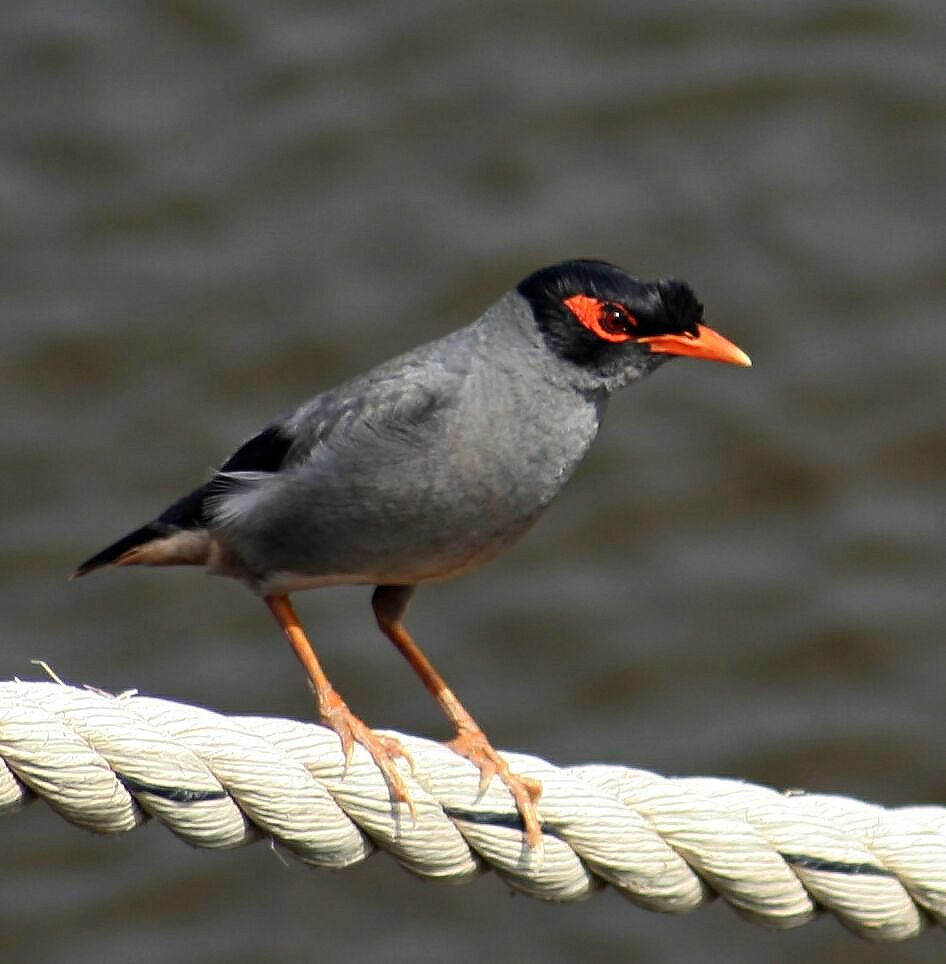
Photo: Mukerjee · CC BY-SA 3.0 (May be cropped or resized)
Acridotheres ginginianus
Basic stats
Diet
Grain, insects and fruits, including crop pests
Habitat
Nests almost exclusively in earthen banks of rivers, excavating burrows in large colonies
Range
Northern parts of South Asia, apparently extending south into India
Clutch size
About 4–5 pale sky-blue or greenish-blue eggs
Incubation period
Hatch after 13–14 days; fledge in about 21 days
The bank myna is smaller than but similar in colouration to the common myna, differing in having brick-red naked skin behind the eyes instead of yellow. It is found in the northern parts of South Asia. The head is black on the crown and sides, the upperparts slaty grey and the underside lighter grey with pale pink towards the centre of the abdomen (Wikipedia, general species account).
The name comes from its habit of nesting almost exclusively in the earthen banks of rivers, where it excavates burrows and breeds in large colonies. About four or five pale sky-blue or greenish-blue eggs hatch after 13 to 14 days, and nestlings fledge in about 21 days. It is gregarious, feeding on grain, insects and fruits, including crop pests. The source read does not name Bhutan.
Quick answers
- What does the Bank Myna eat?
- Grain, insects and fruits, including crop pests
- What habitat does the Bank Myna live in?
- Nests almost exclusively in earthen banks of rivers, excavating burrows in large colonies
- Where is the Bank Myna found?
- Northern parts of South Asia, apparently extending south into India
- How many eggs does the Bank Myna lay?
- About 4–5 pale sky-blue or greenish-blue eggs
- How long are the eggs of the Bank Myna incubated?
- Hatch after 13–14 days; fledge in about 21 days